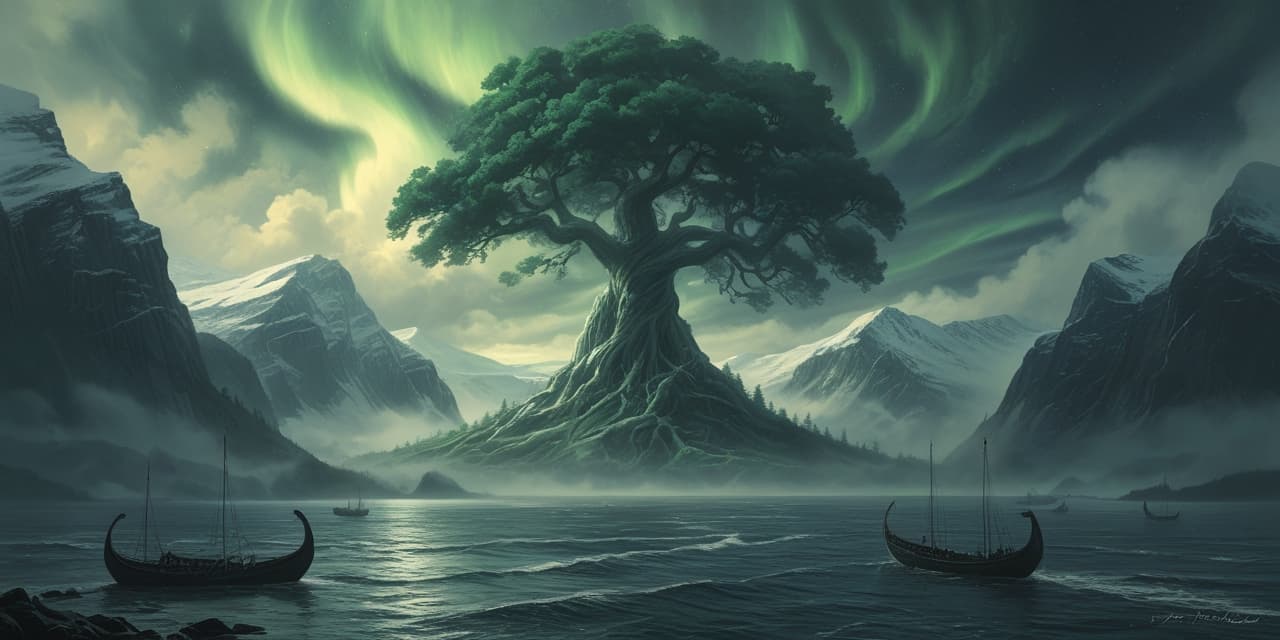
Norse mythology survives mostly in two thirteenth-century Icelandic works, the Poetic Edda and the Prose Edda, alongside skaldic verse and sagas. Its cosmos is a great ash tree, Yggdrasil, connecting nine worlds, with the gods of the Aesir ruling from Asgard.
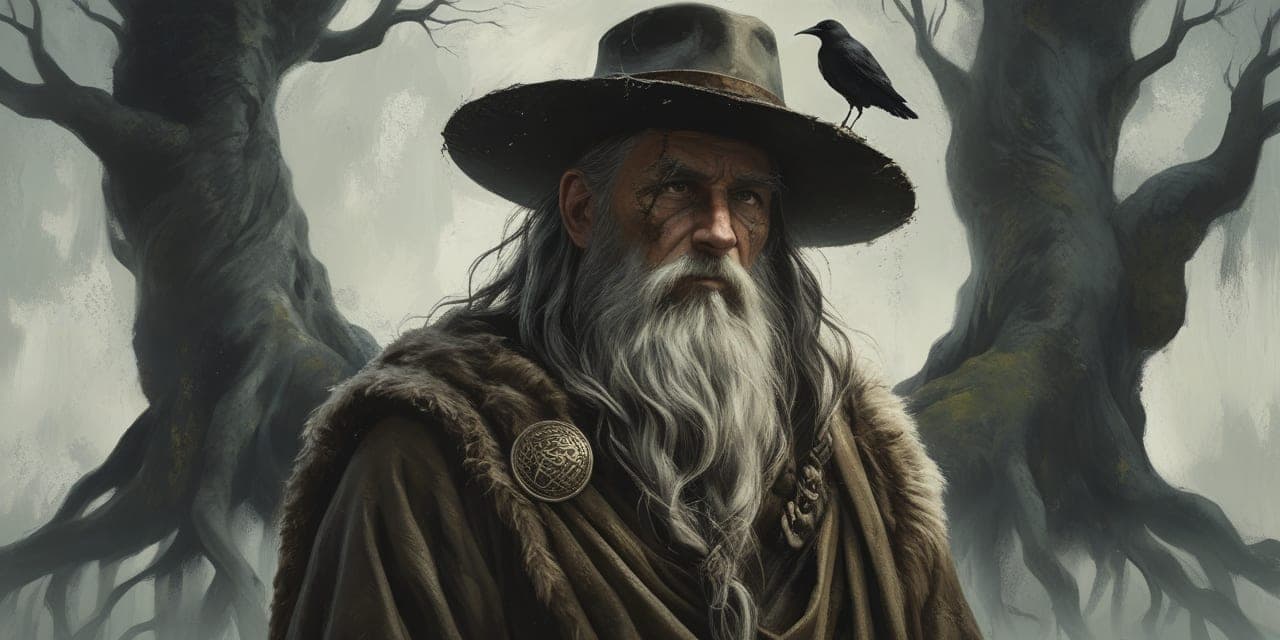
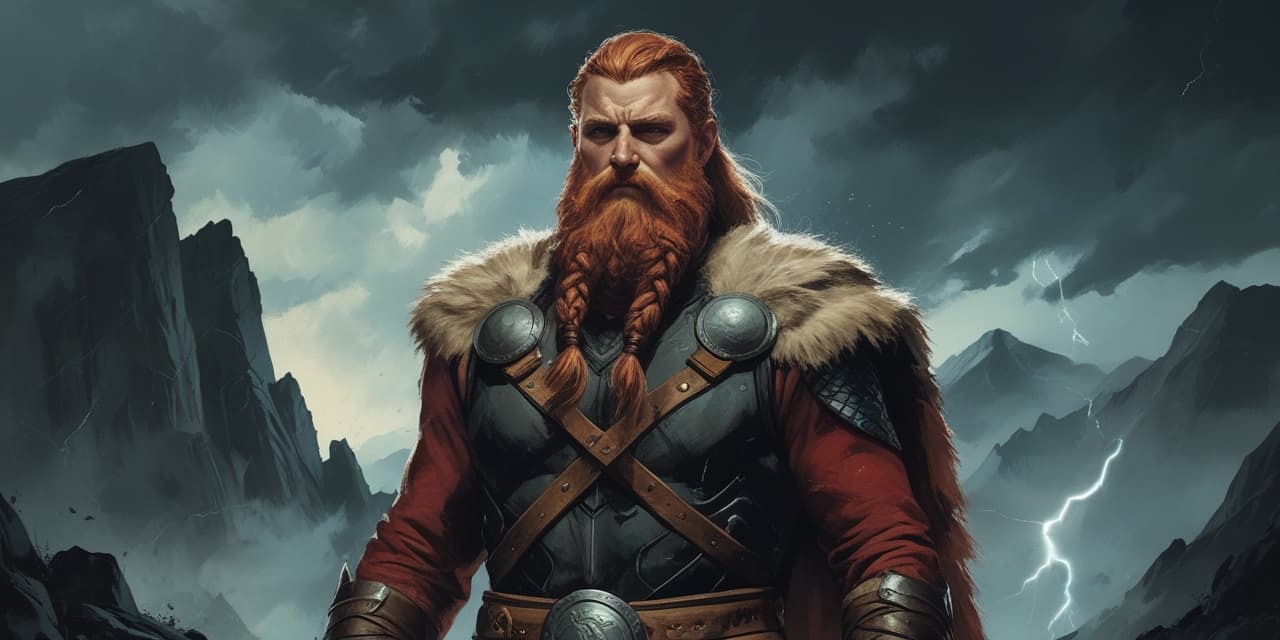
At the center stands Odin, the one-eyed Allfather who trades his eye and hangs himself on Yggdrasil to win wisdom and the runes. His son Thor guards gods and humans alike, swinging the hammer Mjolnir against the giants who threaten the world.
These tales are shadowed by Ragnarok, the foretold doom in which gods and monsters fall together and the world sinks into the sea, only to rise green and renewed. It is a mythology that looks its own ending squarely in the face.
The cosmos itself is mapped onto Yggdrasil, an immense ash tree whose branches and roots connect nine worlds: Asgard, home of the Aesir; Vanaheim, home of the rival Vanir gods; Midgard, the realm of humans; Jotunheim, land of the giants; and shadowy Niflheim and fiery Muspelheim, whose meeting is said to have sparked creation itself. At the tree's roots sit the Norns, three fate-weaving beings who tend the well of Urd and set the destinies of gods and mortals alike.
Few mythologies have left as deep a mark on the modern world. Four of the seven weekdays in English derive from Norse gods — Tuesday, Wednesday, Thursday, and Friday trace back to Tyr, Odin, Thor, and Frigg (or, some scholars argue, Freya) — and the sagas' vivid cast has inspired everything from Wagner's operas to Tolkien's dwarves and elves to modern film and games. Much of what survives was written down generations after Scandinavia's conversion to Christianity, chiefly by the Icelandic chieftain and historian Snorri Sturluson, so scholars continue to debate how faithfully the Eddas preserve genuine pre-Christian belief versus later literary reshaping.
Common Questions
What are the main sources for Norse mythology?
Most surviving Norse myth comes from two 13th-century Icelandic texts: the anonymous Poetic Edda, a collection of mythological poems, and the Prose Edda, compiled by the scholar Snorri Sturluson as a handbook for court poets.
What is Ragnarok?
Ragnarok is the prophesied final battle in which the gods, giants, and monsters destroy one another and the world is swallowed by fire and sea, only for a new, green earth to rise afterward — ruled in part by survivors such as the reborn Baldr.