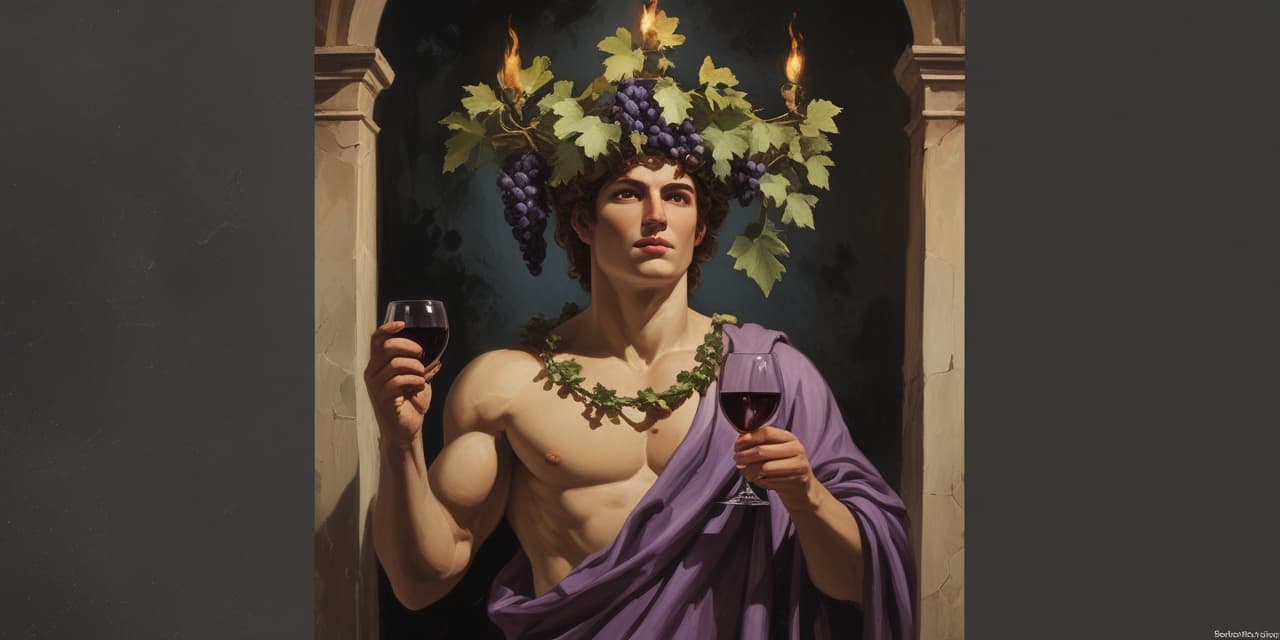
The God Twice-Born
Dionysus is the god of wine, ecstasy, fertility, and theatre — the Olympian who dissolves boundaries between joy and madness, civilization and wildness. He brings liberation through intoxication and divine frenzy, and his rites could heal or destroy. As patron of drama, he presided over the Athenian festivals where Greek tragedy and comedy were born.
He is the son of Zeus and the mortal princess Semele, making him uniquely half-mortal among the great gods. When Semele died before his birth, Zeus sewed the unborn child into his own thigh until he was ready — earning Dionysus the title "twice-born."
An outsider who wandered from the East before being accepted on Olympus, he was often paired in thought with Apollo as his opposite: where Apollo embodied reason and restraint, Dionysus embodied passion, release, and the irrational. The Romans called him Bacchus, and his wild female followers were the Maenads.
Ecstasy, wine, and instinct. Order dissolved through divine madness and release.
Reason, music, and clarity. Order upheld through discipline and form — his complementary opposite.
Myths & Worship
- Bacchus — his most common Roman name, source of the word "bacchanalia"
- Bromios — "the roaring one," recalling his thunder-wrapped birth
- Eleutherios — "the liberator," for the freedom his wine and rites brought
- Maenads — his ecstatic female followers, prone to frenzied, superhuman feats
- Thyrsus — a fennel staff tipped with a pinecone, carried by him and his followers
Hera, jealous of Zeus's affair with Semele, pursued Dionysus with hostility throughout his myths, at one point driving him mad and sending him wandering through Egypt and Asia before he was cured by the Titaness Rhea. Captured by Tyrrhenian pirates who failed to recognize him, he made vines burst from the ship's deck and turned his captors into dolphins in terror. He later married the mortal princess Ariadne after Theseus abandoned her on Naxos, and the two were said to have been placed among the stars. As one of the twelve Olympians — a late addition to the pantheon, sometimes said to have taken Hestia's seat among the canonical twelve — Dionysus was worshipped with ecstatic rites recorded by ancient sources from Thrace to Attica.
Common Questions
Why is Dionysus called "twice-born"?
His mortal mother Semele perished before his birth, so Zeus carried the unborn child in his thigh until full term. Dionysus was thus "born" once from his mother and again from his father, a double birth that set him apart from the other Olympians.
What is the connection between Dionysus and theatre?
Greek drama grew out of choral rites performed in his honor. The City Dionysia in Athens was a festival dedicated to him at which tragedies and comedies were staged in competition, making him the divine patron of the theatre.
Who were the Maenads?
The Maenads were Dionysus's female followers, driven into ecstatic, frenzied states by wine and ritual. In myth they were capable of superhuman feats and violence while under his influence, most infamously tearing the Theban king Pentheus apart for spurning the god's worship — a story dramatized in Euripides's The Bacchae.

