The Good God
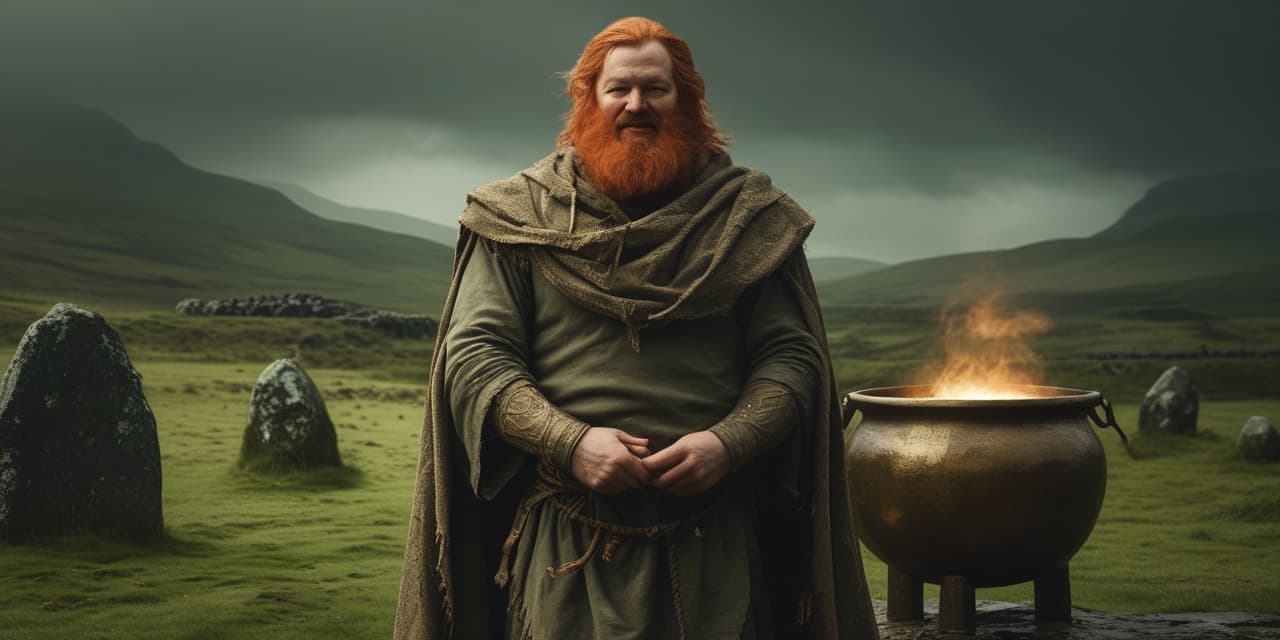
The Dagda is the towering father-figure of the Tuatha Dé Danann, a god of fertility, abundance, magic, and raw strength. His name means "the Good God" — not morally good, but good at everything, a master of every skill the tribe might need.
He wields three great treasures. His enormous club kills with one end and restores life with the other; his bottomless cauldron, the coire ansic, never leaves a company unsatisfied; and his living harp, Uaithne, commands the seasons and the moods of men. He also bears the epithet Ruad Rofhessa, "Red One of Great Knowledge."
On Samhain, the Dagda famously unites with the Morrigan as she straddles a river, securing victory for his people in the great battle against the Fomorians. Among his children is the luminous goddess Brigid, who inherits his deep wisdom and craft.
The medieval text Cath Maige Tuired ("The Battle of Mag Tuired") preserves the Dagda's most vivid episodes. When the Fomorians steal his harp Uaithne, he slips into their camp to reclaim it and plays the three noble strains of Irish music in turn — the music of sorrow, the music of joy, and the music of sleep — lulling his enemies to rest before walking free, weapon in hand. The same text contains a broadly comic scene in which the Fomorians, mocking his reputation for appetite, force him to eat an enormous pit of porridge, meat, and milk before he can fight; he finishes every bite and still, despite his distended belly, goes on to meet a young woman the next day.
As brother to Nuada, the Dagda stood at the center of the Tuatha Dé Danann's leadership through both great wars of the mythological cycle, and later folklore remembers him as the ancestor-figure behind several of Ireland's most famous passage tombs, including Newgrange, which Irish tradition names as his dwelling.
Key Myths & Possessions
- The Harp of Uaithne — recovered from the Fomorian camp using its three magical strains of sorrow, joy, and sleep
- The Cauldron Feast — his bottomless cauldron, the coire ansic, ensures no company ever goes hungry
- The Porridge of the Fomorians — forced to eat an enormous portion before battle in a comic trial of endurance
- The Union with the Morrigan — meets her at the River Unshin on Samhain, securing her aid against the Fomorians
- Father of Brigid — his daughter inherits his mastery of craft and hidden knowledge
- Brother of Nuada — together they lead the Tuatha Dé Danann through their founding wars
Common Questions
Does "Dagda" mean he is morally good?
No — the name means "good at everything," reflecting his mastery of many skills rather than virtue.
What are the Dagda's most famous possessions?
His life-and-death club, his inexhaustible cauldron, and his magical harp that controls the seasons and emotions.
What is the story of the Dagda's harp?
Named Uaithne, it was stolen by the Fomorians; the Dagda infiltrated their camp and played it to summon sorrow, joy, and finally sleep over the whole company, letting him walk out with the harp restored.

