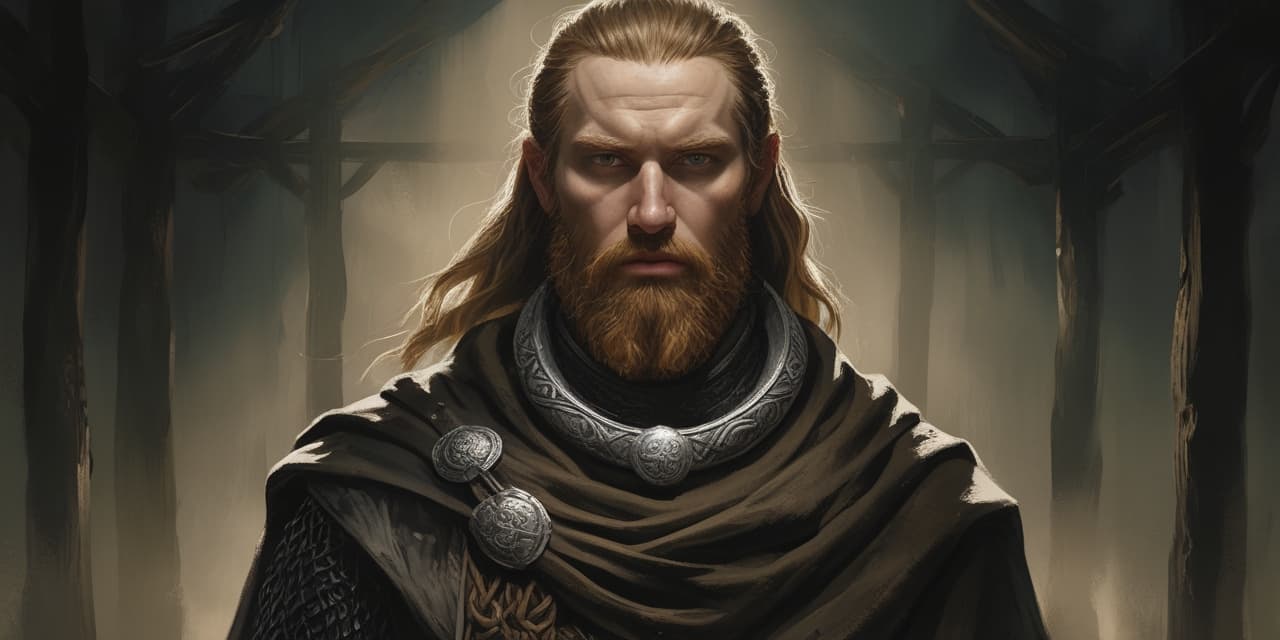
The King of the Silver Hand
Nuada was the first king of the Tuatha Dé Danann, leading them into Ireland and into their first great battle against the native Fir Bolg. He is best known by his epithet Airgetlám — "Silver Hand" or "Silver Arm."
In that first battle Nuada lost his hand, and because Celtic law held that a king must be physically whole, he was forced to surrender the throne. The healer Dian Cécht fashioned him a working hand of silver, and later it was replaced with one of living flesh, restoring his right to rule.
His name descends from the Proto-Celtic Noudons, also known to the Britons as the healing god Nodens. Nuada eventually yielded leadership to the brilliant Lugh, recognizing that the young warrior was better suited to lead against the Fomorian threat — a rare act of kingly humility.
The silver hand was only the first fix. According to Cath Maige Tuired, the physician Dian Cécht's own son, Miach, went further and grafted flesh, skin, and sinew onto Nuada's arm, restoring it completely — a feat that surpassed his father's craftsmanship. Jealous of being outdone, Dian Cécht killed Miach; from the healer's grave grew three hundred and sixty-five herbs, one for every joint and sinew of the human body, which Miach's sister Airmid carefully arranged by their curative powers, until Dian Cécht scattered them in a rage, scrambling forever the knowledge of a perfect cure for every illness.
As brother to the Dagda, Nuada also carried one of the Tuatha Dé Danann's four legendary treasures: a sword brought from the city of Findias, from which, the texts say, no one ever escaped once it was drawn from its sheath. The medieval sources leave it unnamed - "the Answerer" (Fragarach) belongs to Manannán and Lugh, and the "Sword of Light" comes from later folktales.
Whole-bodied king who led the Tuatha Dé into Ireland.
Crafted by Dian Cécht after he lost his hand in battle.
A flesh hand returned him to the throne for a second rule.
Key Myths & Treasures
- The Sword of Findias - one of the tribe's four treasures, which no one escaped once it was drawn from its sheath
- The Silver Hand — the prosthetic Dian Cécht fashioned after Nuada lost his arm at the first battle of Mag Tuired
- The Flesh Hand — grafted by Miach, restoring Nuada fully and costing Miach his life to his jealous father
- The Herbs of Miach — 365 healing plants grown from Miach's grave, scattered before their full power could be recorded
- Stepping Down for Lugh — his voluntary abdication in favor of the younger god before the second battle
Common Questions
Why did Nuada lose his throne?
He lost a hand in battle, and Celtic tradition required a king to be physically unblemished, so he had to step down until he was healed.
What is Nuada's sword called?
The medieval texts leave it unnamed - it is simply the sword from the city of Findias, one of the four treasures of the Tuatha Dé Danann, which no one escaped once it was drawn. The names "Sword of Light" and "the Answerer" belong to later folktales and to other heroes' weapons.
Who healed Nuada's hand?
The physician Dian Cécht first fashioned a working silver hand, and his son Miach later replaced it with one of living flesh — though Dian Cécht killed Miach out of jealousy for surpassing his own skill.

