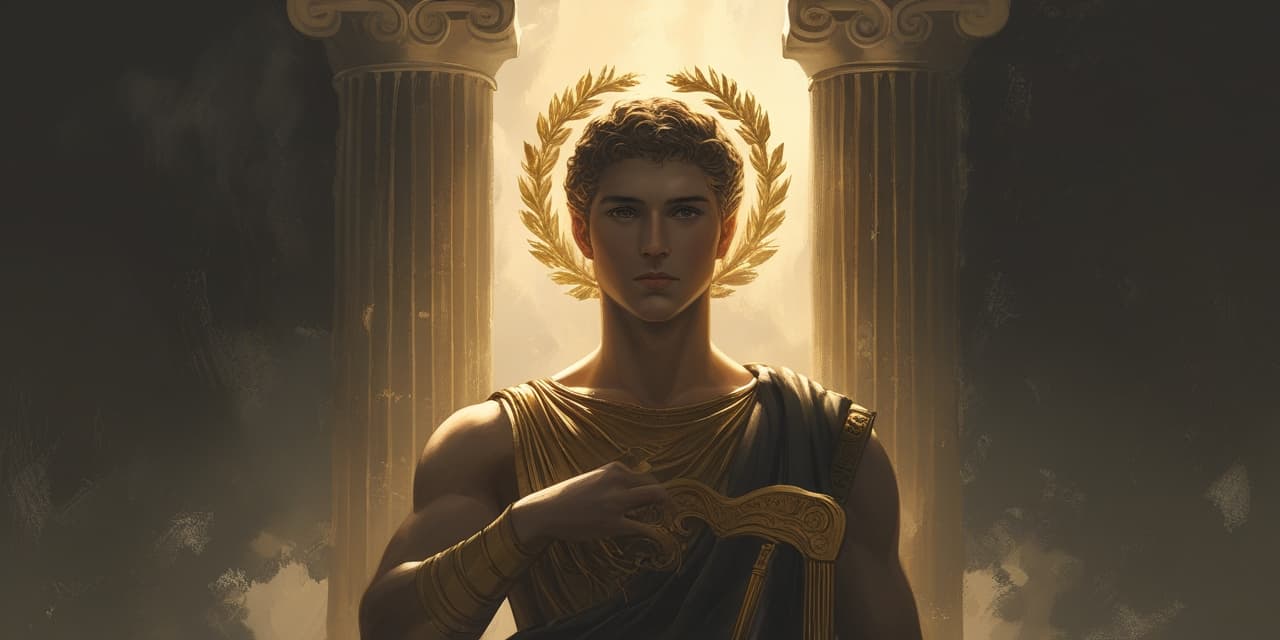
The Most Greek of the Gods
Apollo embodies the Greek ideal — beauty, reason, order, and artistic excellence. He is the god of light, prophecy, music, poetry, archery, and healing, and the patron of rational thought. No other Olympian covers as much ground. The twin of Artemis, he was born to Zeus and the Titaness Leto on the floating island of Delos, the only land that dared shelter Leto from Hera's wrath.
His name's origin is genuinely disputed — unusual for a major deity. The most cited link is to apollymi ("to destroy"), though others trace it to Doric apellon ("assembly") or to pre-Greek Anatolian roots, suggesting Apollo arrived in Greece from outside.
The Oracle at Delphi
Apollo's first act after birth was to slay Python, the serpent that had tormented his mother, and claim the oracle at Delphi as his own. Delphi became the most influential religious institution in the Greek world. Cities consulted it before wars, colonies, and major decisions, and the Pythia delivered cryptic prophecies in Apollo's name.
The oracle's power rested on ambiguity. When King Croesus asked whether to attack Persia, he was told a great empire would fall. He attacked — and a great empire fell: his own.
Tragedies of Love and Prophecy
Apollo is also a god of failed love stories. He pursued the nymph Daphne, who was turned into a laurel tree to escape him — he made the laurel his sacred plant, the source of the victor's wreath. He loved the youth Hyacinthus, killed by a wind-blown discus, and from his blood raised the hyacinth flower.
Cruelest of all is Cassandra: Apollo gave the Trojan princess the gift of prophecy, but when she refused him, he cursed her to foresee the truth and never be believed. She predicted the fall of Troy, and no one listened.
Common Questions
Is Apollo the god of the sun?
In early Greek religion, the Titan Helios drove the solar chariot, while Apollo was primarily the god of light, truth, and prophecy. Over time the two merged, and Apollo absorbed Helios's solar functions until, by the Hellenistic period, they were effectively synonymous in popular belief.
Why was Apollo important to Greek culture?
His oracle at Delphi shaped Greek history by advising colonization, reforms, and military campaigns, while his patronage of the arts placed intellectual and creative life under his auspices. As the embodiment of beauty, reason, and order, he symbolized the ideals the Greeks most prized in themselves.

