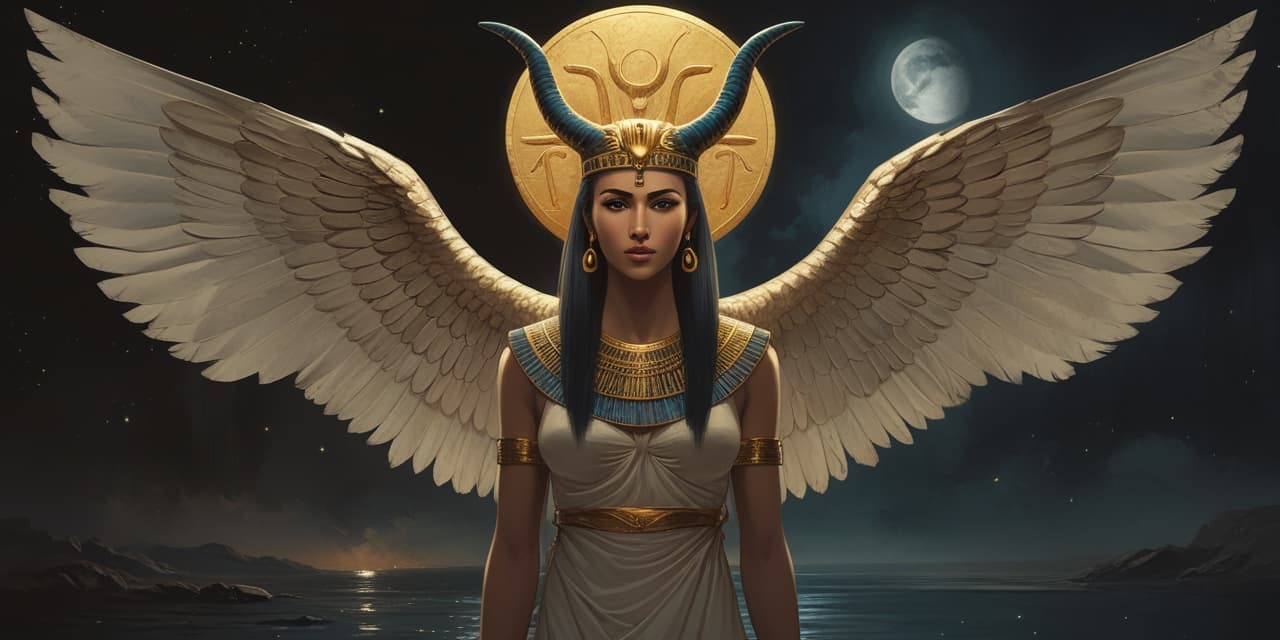
The Great of Magic
Isis was the most beloved goddess of Egypt, mistress of magic, healing, and motherhood. Daughter of Geb and Nut, she married her brother Osiris and ruled beside him as queen. Her name comes from the Egyptian Aset, meaning "throne" — fittingly, she wears a throne-shaped headdress and embodies the royal seat that legitimized every pharaoh.
When her brother Set murdered Osiris, Isis searched the land for his body, used her spells to revive him, and conceived their son. She is often shown as a kite, a bird of prey, beating her wings to breathe life back into the dead.
Mother and Protector
Hiding in the marshes of the Delta, Isis raised her son Horus in secret, shielding him from Set's wrath with her cunning and magic. This image of mother and divine child shaped Egyptian devotion for millennia and influenced art far beyond Egypt's borders.
Her healing powers were legendary: myths tell how she tricked even Ra into revealing his secret name, gaining mastery over the most powerful magic in creation. Temples to Isis spread across the Mediterranean, where she was worshipped well into the Roman era.
The Last Pagan Temple
Isis outlasted almost every other Egyptian deity as a living cult. Her sanctuary on the island of Philae, near Egypt's southern border, kept performing traditional rites long after Christianity had become the Roman Empire's official religion, and is often named as the last actively functioning temple of the old Egyptian religion before the emperor Justinian ordered it closed around 537 CE — a run of continuous worship stretching back well over a thousand years, according to Wikipedia's history of Philae.
Her core epithet, Weret-Hekau, "Great of Magic," captures why her cult traveled so far: Isis was worshipped not only as Osiris's devoted wife but as a self-sufficient sorceress whose power rivaled the gods who outranked her by birth. Statues of her nursing the infant Horus — a pose Egyptologists call the Isis lactans — spread throughout the ancient Mediterranean and are widely noted by art historians as a visual precedent for later Madonna-and-child imagery.
Epithets & Powers
- Weret-Hekau — "Great of Magic," her mastery of spells and secret names
- Mut-netjer — "Mother of the God," anchoring her cult as mother of the reigning king
- Nurse of Horus — protector of her infant son hidden in the Delta marshes
- Lady of the Words of Power — patron of healing spells, amulets, and protective magic
- Queen of the Ennead — highest-ranking goddess of the Heliopolitan family
As the central mother figure of the Ennead, Isis links the royal cosmology of Egyptian mythology to some of the most enduring devotional imagery to survive from the ancient world.
Common Questions
What does the name Isis mean?
It derives from the Egyptian word Aset, meaning "throne," reflecting her role as the personification of royal power.
Why is Isis associated with magic?
She revived Osiris with spells and outwitted Ra to learn his secret name, making her the supreme magician among Egyptian deities.
How long was Isis worshipped?
Her cult endured longer than almost any other Egyptian deity's — her temple at Philae is often cited as the last active temple of the traditional religion, closed by Emperor Justinian around 537 CE.

