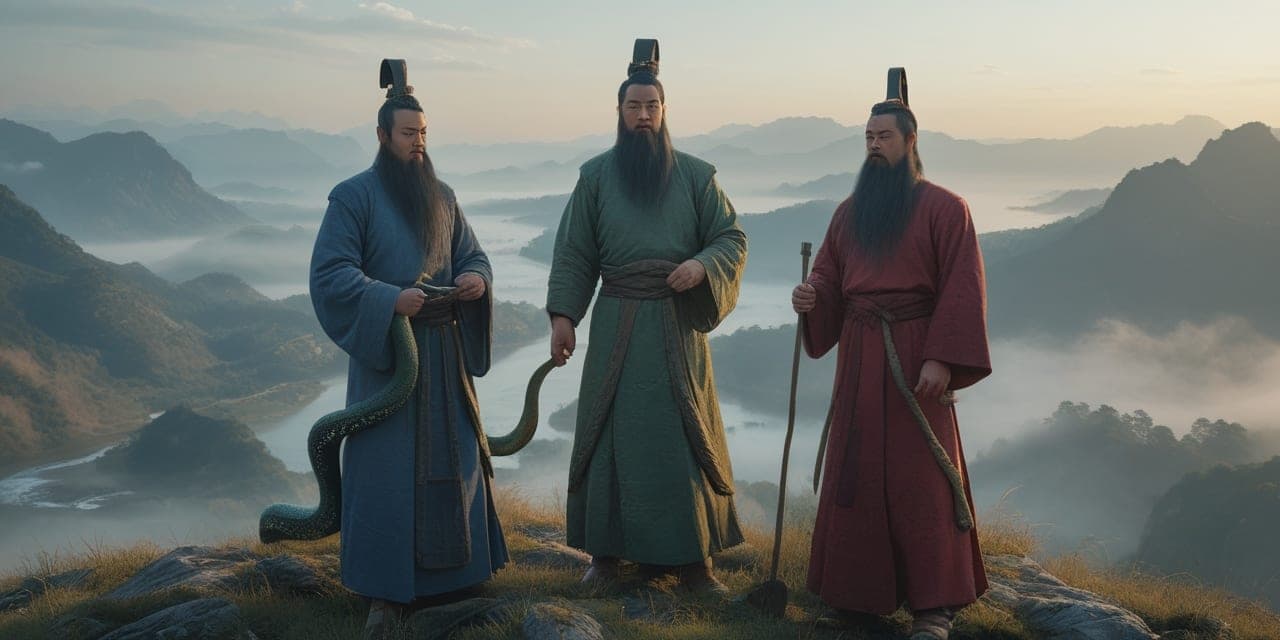
The Three Sovereigns (Sanhuang) are a legendary founding dynasty said to have ruled before recorded history and to have given early humanity its first technologies. They sit at the root of Chinese mythology's creation and culture-hero stories, though — true to a tradition assembled from many overlapping texts rather than one fixed scripture — ancient sources don't fully agree on exactly who belongs on the list.
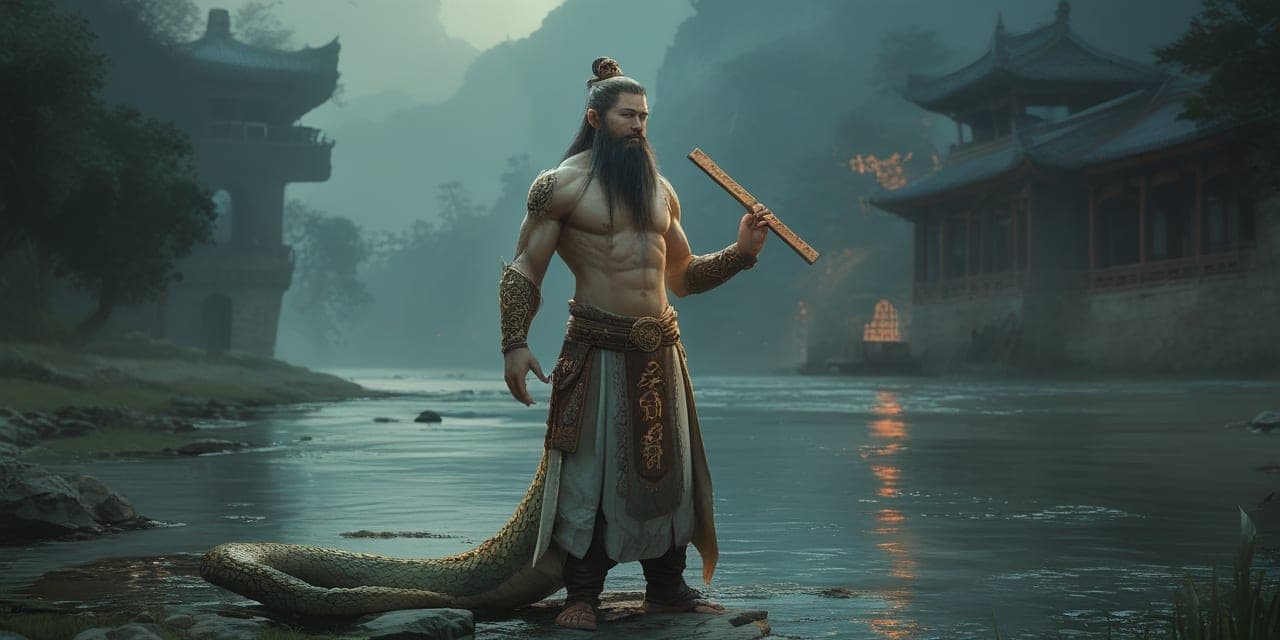
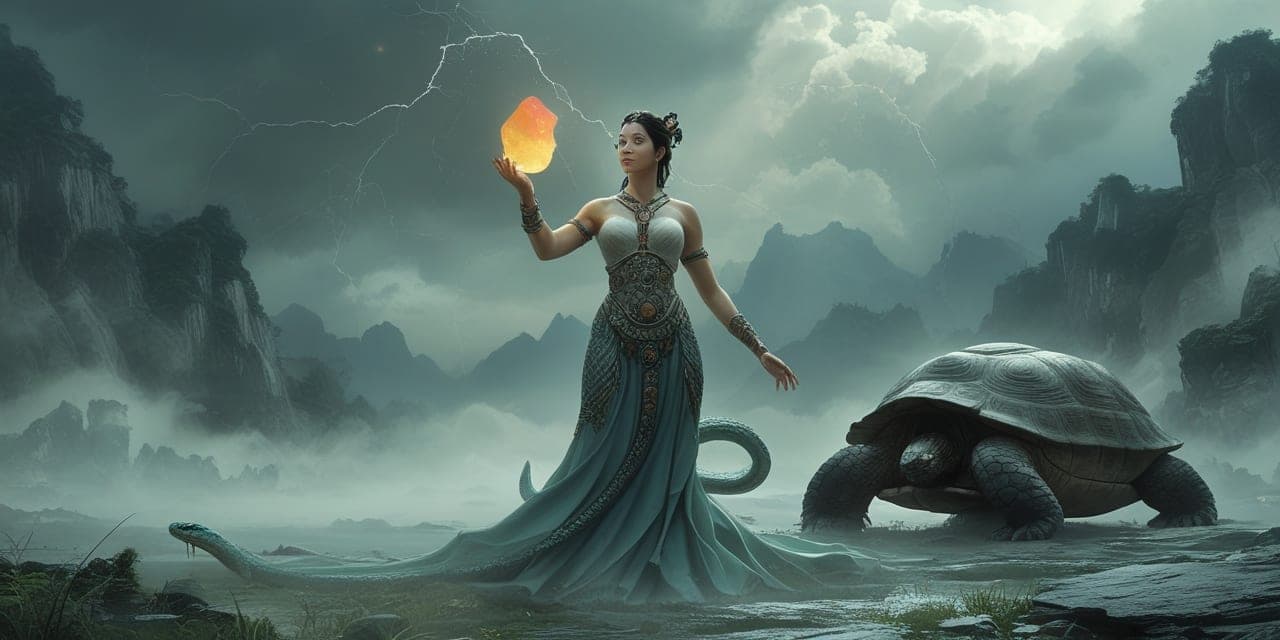
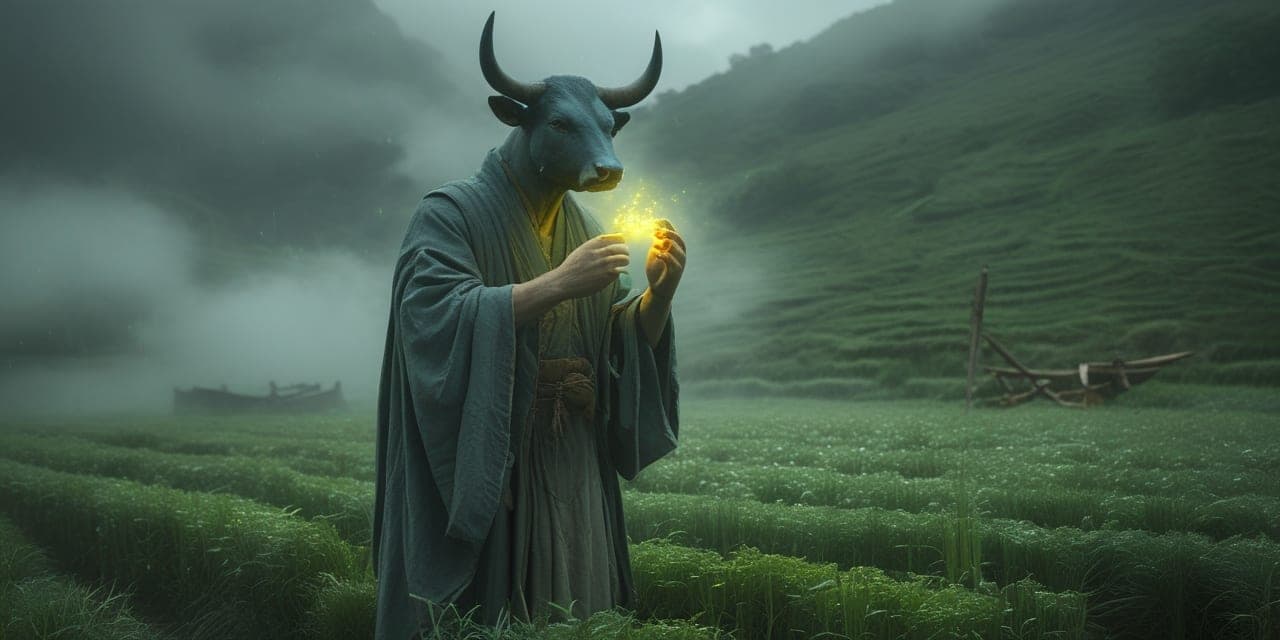
The most commonly cited trio pairs the sibling-consorts Fuxi and Nuwa with Shennong, the Divine Farmer. Fuxi is credited with writing, fishing, and the Eight Trigrams; Nuwa with molding humanity from clay and mending a shattered sky; and Shennong with inventing the plow and cataloguing hundreds of medicinal herbs, sometimes at great personal risk.
Members
- Fuxi — culture hero credited with writing, fishing nets, and the Eight Trigrams.
- Nuwa — creator goddess who molded humanity from clay and mended the sky.
- Shennong — the Divine Farmer, teacher of agriculture and herbal medicine.
Unlike a genealogical pantheon such as the Greek Olympians or Norse Aesir, the Three Sovereigns aren't necessarily bound by blood beyond Fuxi and Nuwa's own sibling-consort pairing — Shennong is generally treated as a separate, roughly contemporary ruler rather than their relative. Later tradition extends the lineage forward into the Five Emperors, among them the Yellow Emperor, regarded as the ancestor of the Chinese people; together the Sovereigns and Emperors form a legendary chronology bridging myth and the start of recorded history (see the Britannica overview for how this chronology developed across different texts).