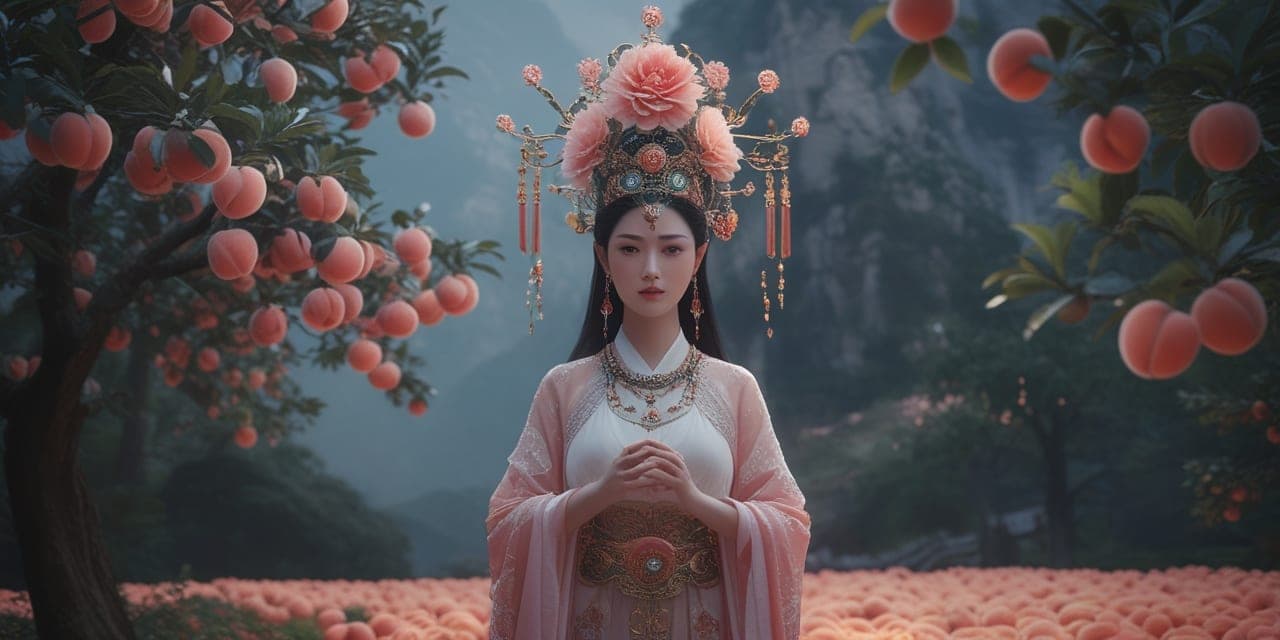
The Queen Mother of the West
Xiwangmu — the Queen Mother of the West — is a mother goddess associated with longevity, prosperity, and transcendence, ruling over an ethereal domain in the far west, traditionally located toward the mythical Kunlun Mountains. Her earliest recorded depictions, in texts like the Classic of Mountains and Seas, describe a wilder, more fearsome figure with tiger's teeth and a leopard's tail, guardian of plague and punishment — very different from the serene, regal goddess of later tradition.
By the Han dynasty, that fierce early image had softened considerably. Xiwangmu became the presiding goddess over female transcendents and immortals, keeper of the secrets of eternal life, and host of a legendary orchard where peaches of immortality ripen only once every three thousand years. Anyone who eats one gains eternal life — a myth that made her garden a recurring destination in later folklore and fiction, most famously raided by the mischievous monkey king Sun Wukong in the novel Journey to the West.
Xiwangmu is typically pictured wearing an elaborate headdress with the peaches of immortality suspended from it, presiding over banquets attended by other transcendent beings. Her consort relationships shift across sources — some pair her with the Jade Emperor, others with a complementary "King Father of the East," Dongwanggong — reflecting how differently regional and period traditions have imagined her court.
Her enduring association with the west and with female authority made her a natural point of comparison whenever later Chinese writers wanted to describe a powerful, otherworldly queen — a role Xiwangmu has occupied continuously in Chinese religious imagination for over two thousand years.
Common Questions
What are the peaches of immortality?
They're magical fruit grown in Xiwangmu's orchard that ripen only once every three thousand years; eating one is said to grant eternal life, a myth popularized further by the novel Journey to the West.
Was Xiwangmu always depicted as a benevolent goddess?
No — the earliest surviving descriptions portray her as a fiercer, half-wild deity associated with plague and punishment. Her image softened into the serene "Queen Mother" figure by the Han dynasty.

